Blog
dormouse walk and talk
jan. 2026
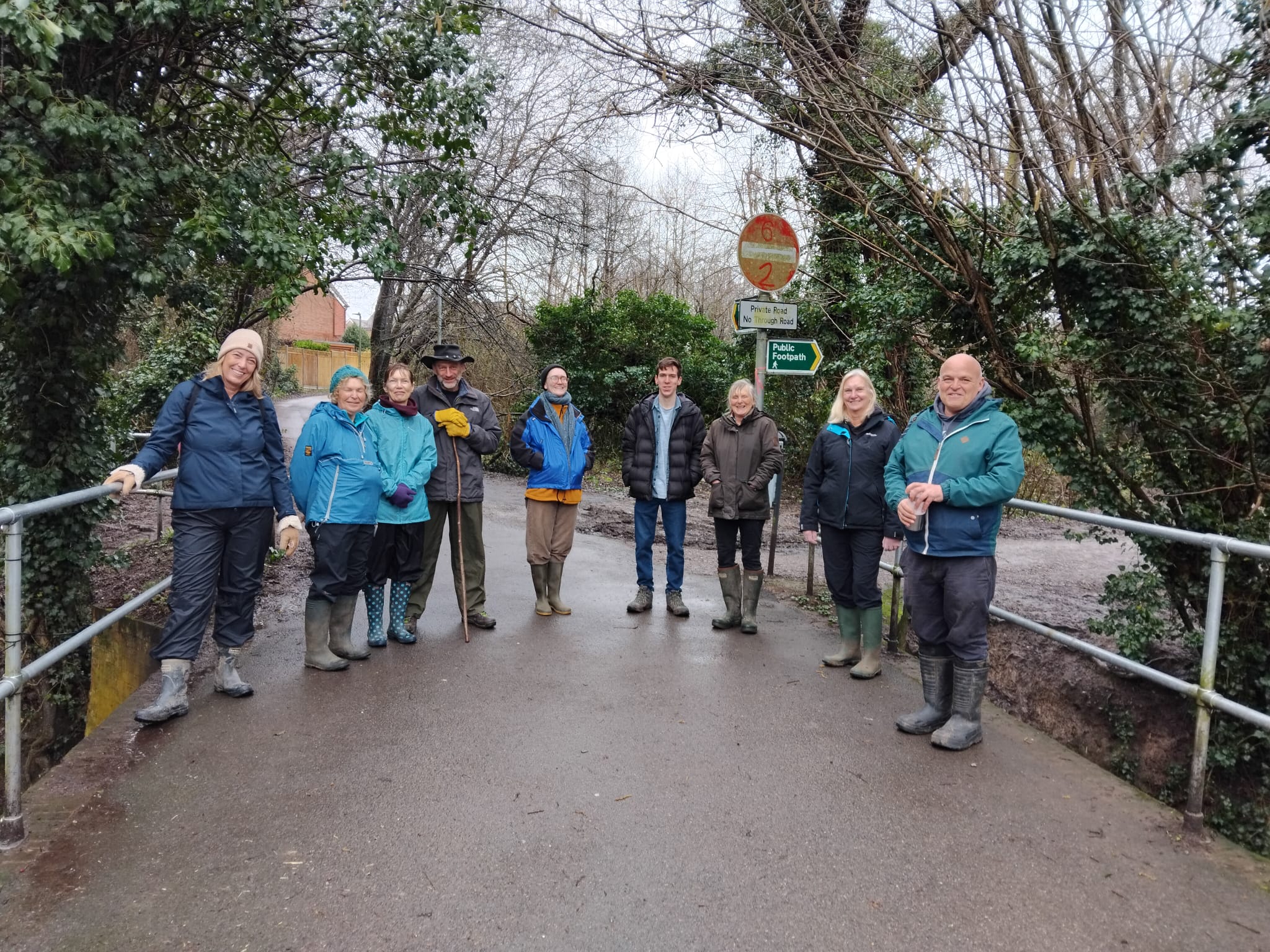
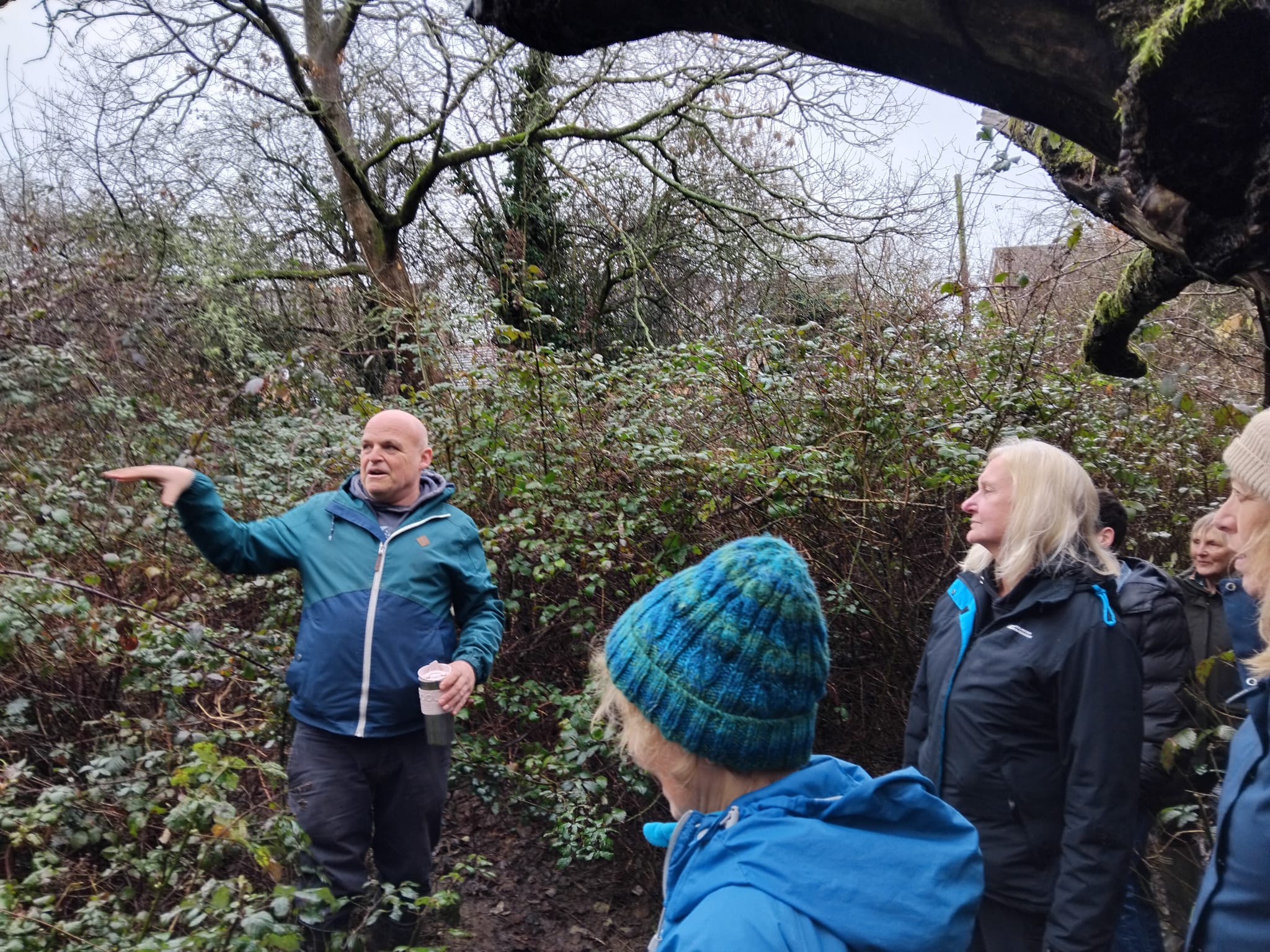
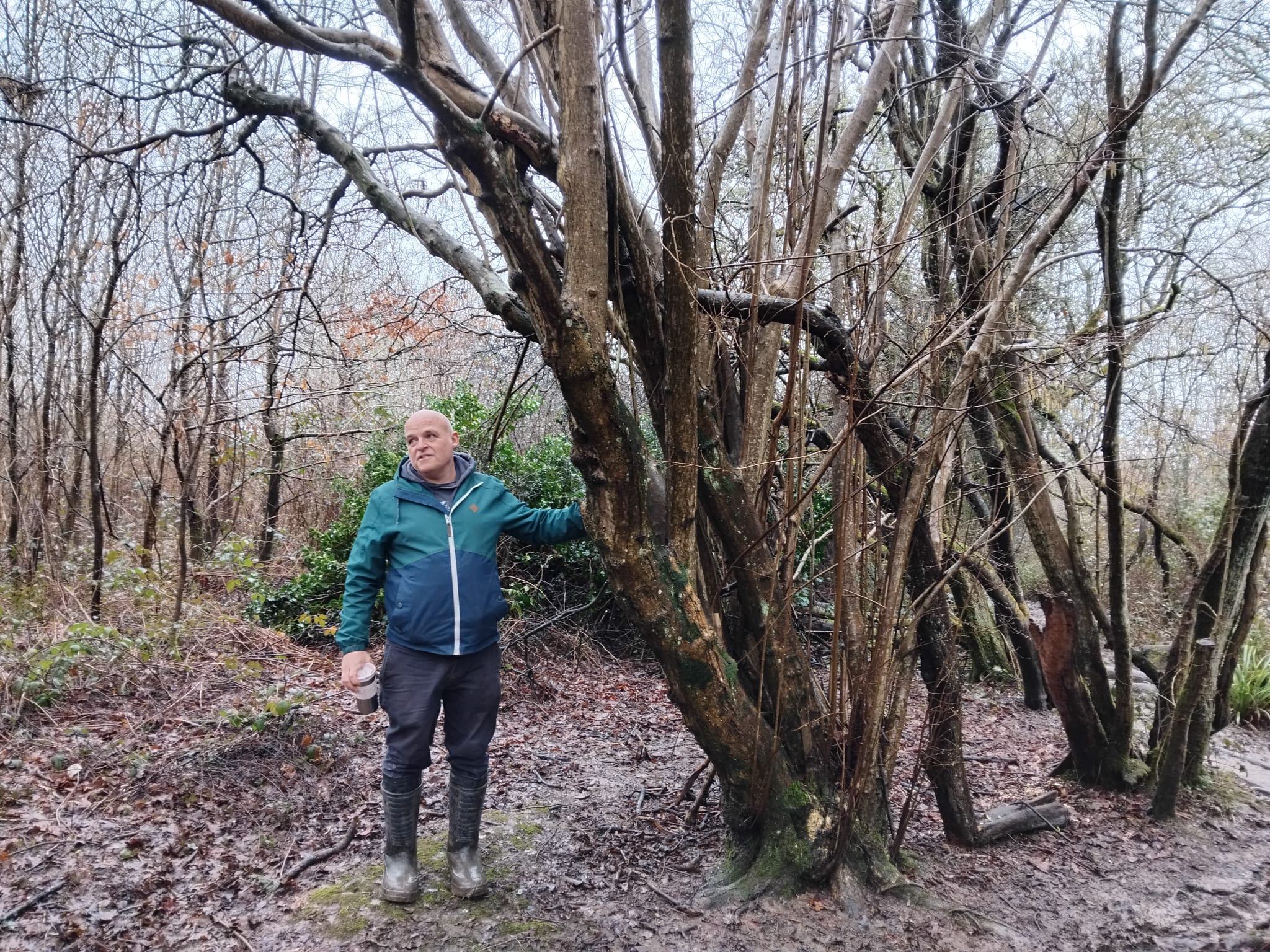
In Janurary, the Friends of Claypit Wood went on a walk through the wood with dormouse expert Chris, to discuss our future dormouse project. We’ve been planning to setup dormouse tunnels within Claypit Wood to monitor dormouse activity, and the walk and talk provided useful information to us about this process, and how we can better support dormice in the wood.
For the dormouse tunnels, Chris recommended we setup 50 tunnels throughout Claypit Wood. We were told to set them up as soon as possible, letting the dormice get used to them until May, when we then put charcoal paste in the tunnels to record any footprints. We will assemble a team to check the tunnels every 2 weeks, until they begin to hibernate around November. It will be very exciting to record evidence of dormouse activity, and to discover where they are active!
If you are interested in learning more about dormouse tunnels and this specific way of evidencing the presence of dormice, please see https://www.wildcare.co.uk/blog/surveying-for-dormice-using-footprint-tracking-tunnels/
Other ways we can support dormice would be to:
- plant more hedgerows to provide more shrubbery, food and pathways
- plant low hedgerows
- place dormice boxes along the railway fence as they can use them for safety when traversing the areas behind the fence (these can only be checked by a licensed expert)
- build trellis bridges to create walkways in areas with less vegetation
- plant tree orchards as a food source
- encourage the use of one main pathway in the northern section of the wood to reduce the damage to plants, such as bluebells, and to encourage the growth of vegetation that the dormice can use to traverse through
We hope to begin this project soon, and we will update you on our progress with future blogs, especially once we setup the dormouse tunnels!
our first Litter Pick
dec. 2025
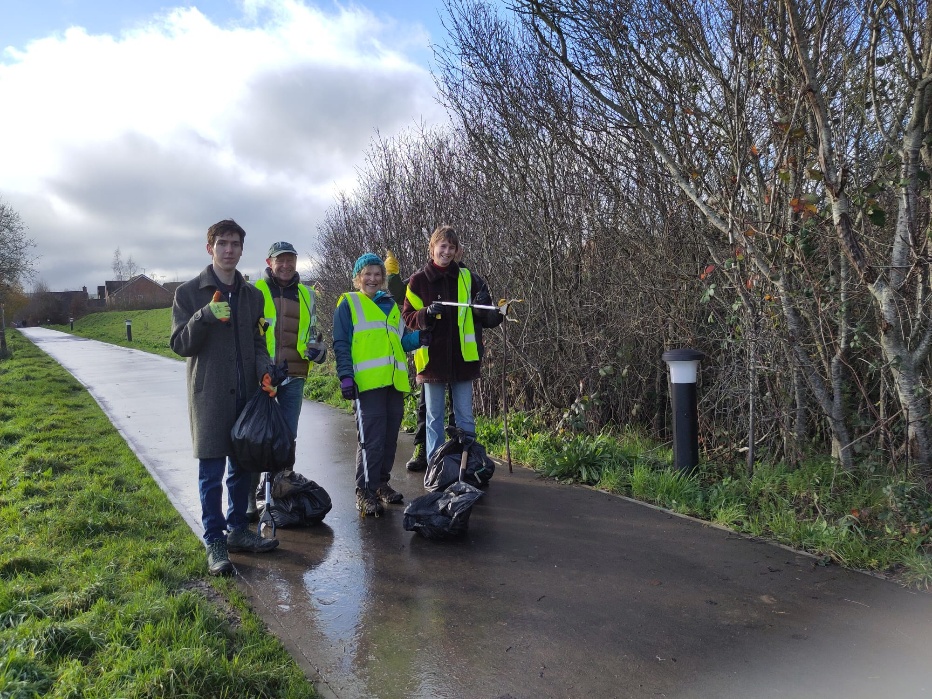
In December, the Friends of Claypit Wood went on the first litter picking session within the wood.
The Lost Woods team kindly brought along some of their litter picking sticks and some bin bags for us to use, and we started off checking the mud ramp area in Claypit Wood. We collected various pieces of litter here, such as food wrappers, and several plastic bottles, one of which was partially buried into the ground in some bushes, and we had a fun time trying to free it using a stick. Pieces of metal were found here too, including a large piece next to the buried bottle, but we avoided removing these and other potentially sharp objects like glass fragments for our own safety. The What3Words app came in handy with these hazardous objects, as we used it to mark the locations of any litter that was unsafe to remove.
We avoided litter picking near sloped areas due to the wet weather, instead moving to the northern end of the wood where we found more litter, including aluminium cans and some very large plastic bottles. Additionally, What3Words was used to mark the location of an assortment of glass, pottery, and other litter near a dug-out hole. We ended the session by exiting Claypit Wood and collecting more litter along the footpath towards the Clayton Mills housing estate, having fun helping each other pry out pieces of litter that were stuck in the bushes.
To summarise, our first litter pick went very well, and we managed to remove a good amount of litter from both Claypit Wood and the nearby footpath, filling our bags up well. There is still plenty more we can remove, and we’re currently trying to organise monthly litter picks to achieve this. It will be nice to have more people helping us to clean up the litter and maintain the beauty of the area, so if you are interested in coming along to future sessions, feel free to let us know at claypitwood@proton.me .
Lost Woods Community Get Together
sept. 2025
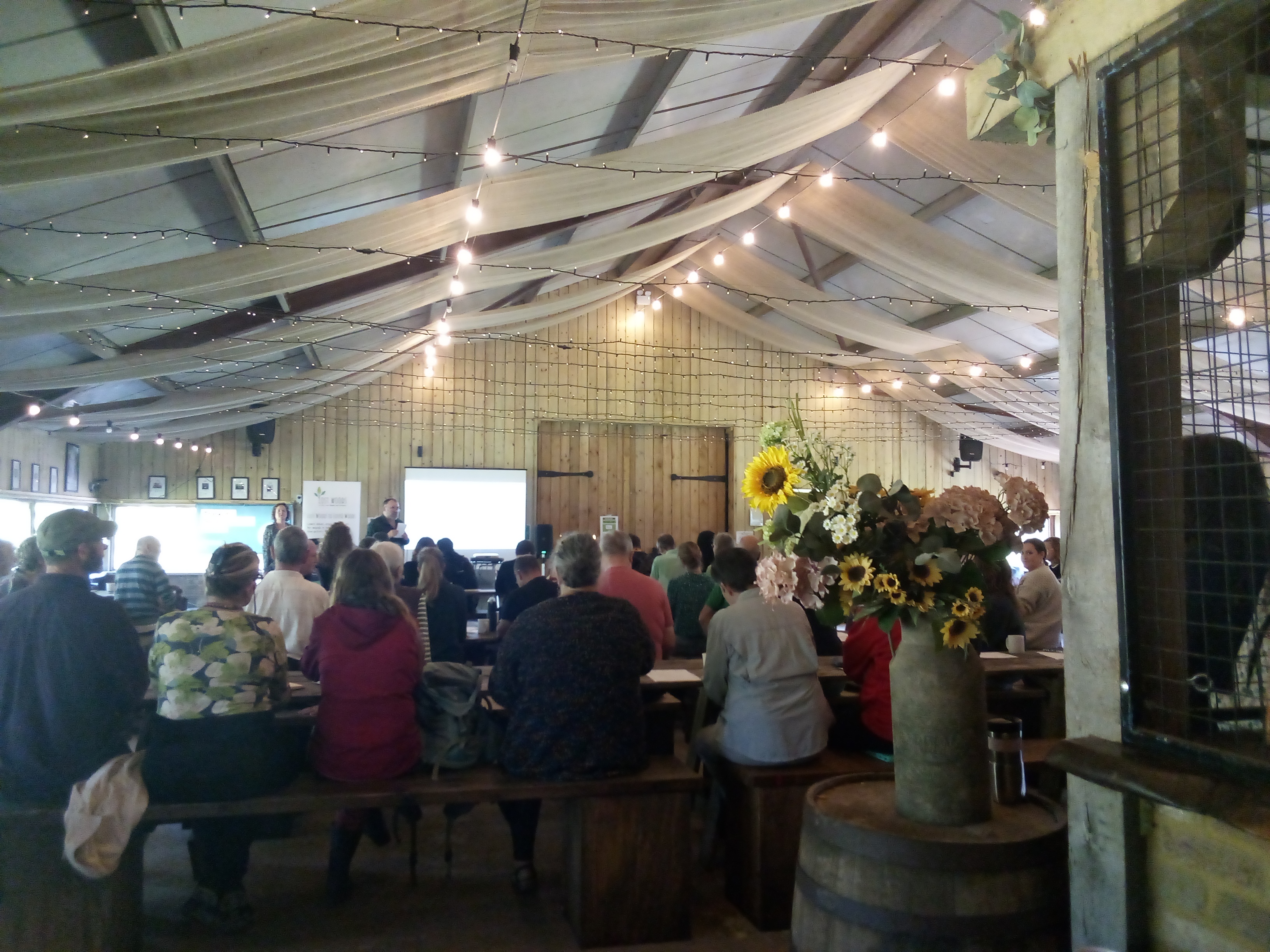
The Friends of Clay Pit Wood recently attended the Lost Woods Community Get Together at Macs Farm in Ditchling. This event provided a space for individuals to form connections with other nature enthusiasts, learn from each other, and grow a community, hosting a variety of workshops to help them gain skills to support their local woods and wildlife. Workshops included activities such as learning about dormice and building tunnels to help survey them, learning how to lead fun and engaging wildlife walks, wildlife and wellbeing and citizen science workshops.
We connected with various people during the event, inviting some to join our friends of group, as well as attending several of the workshops during the day. The main meeting point for the event was at the Nest Box Bar, a large barn which was a lovely space to chat to people and have some food, and we also listened to several presentations by the Lost Woods team there.
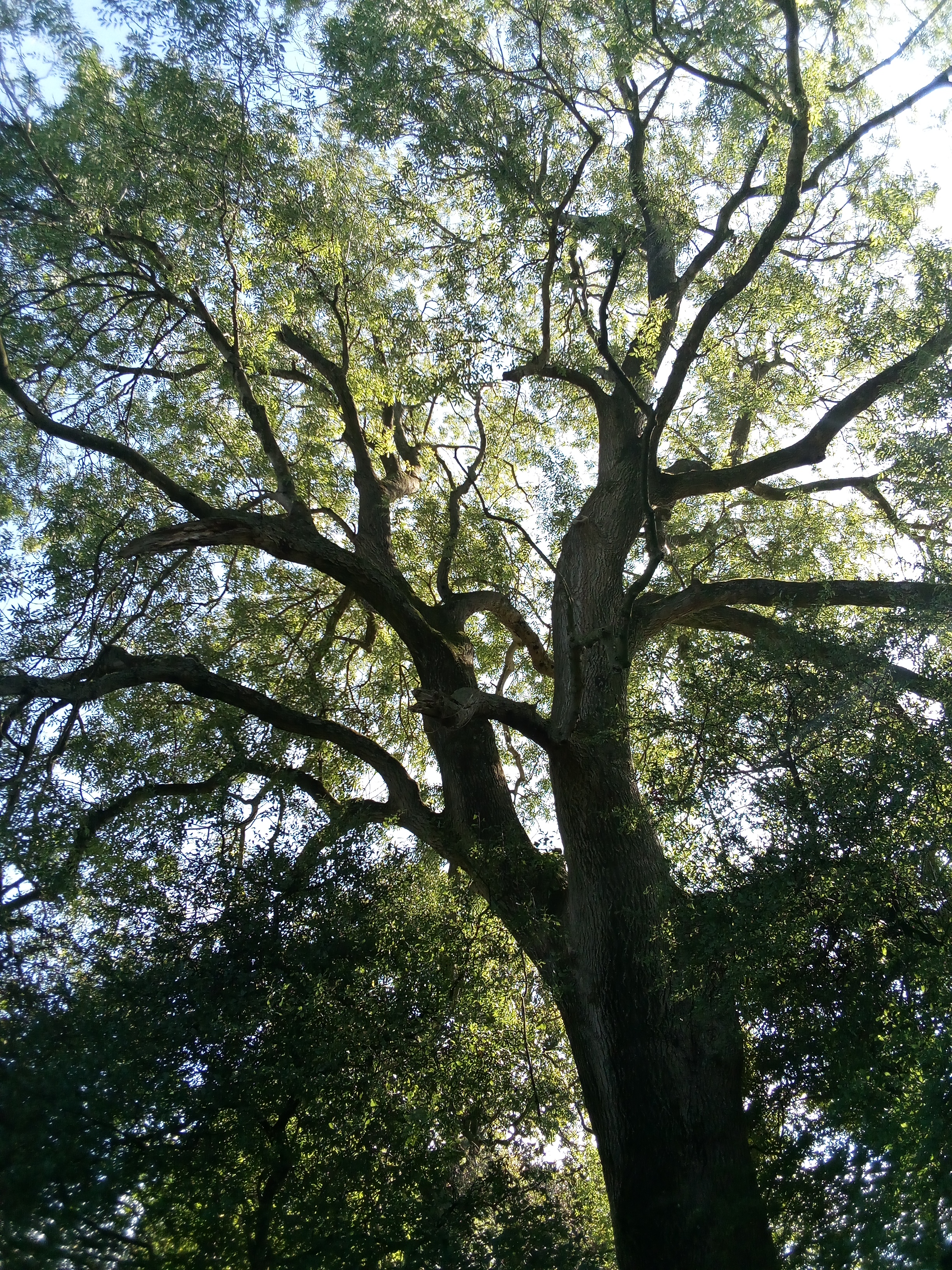
Wellbeing in the Woods
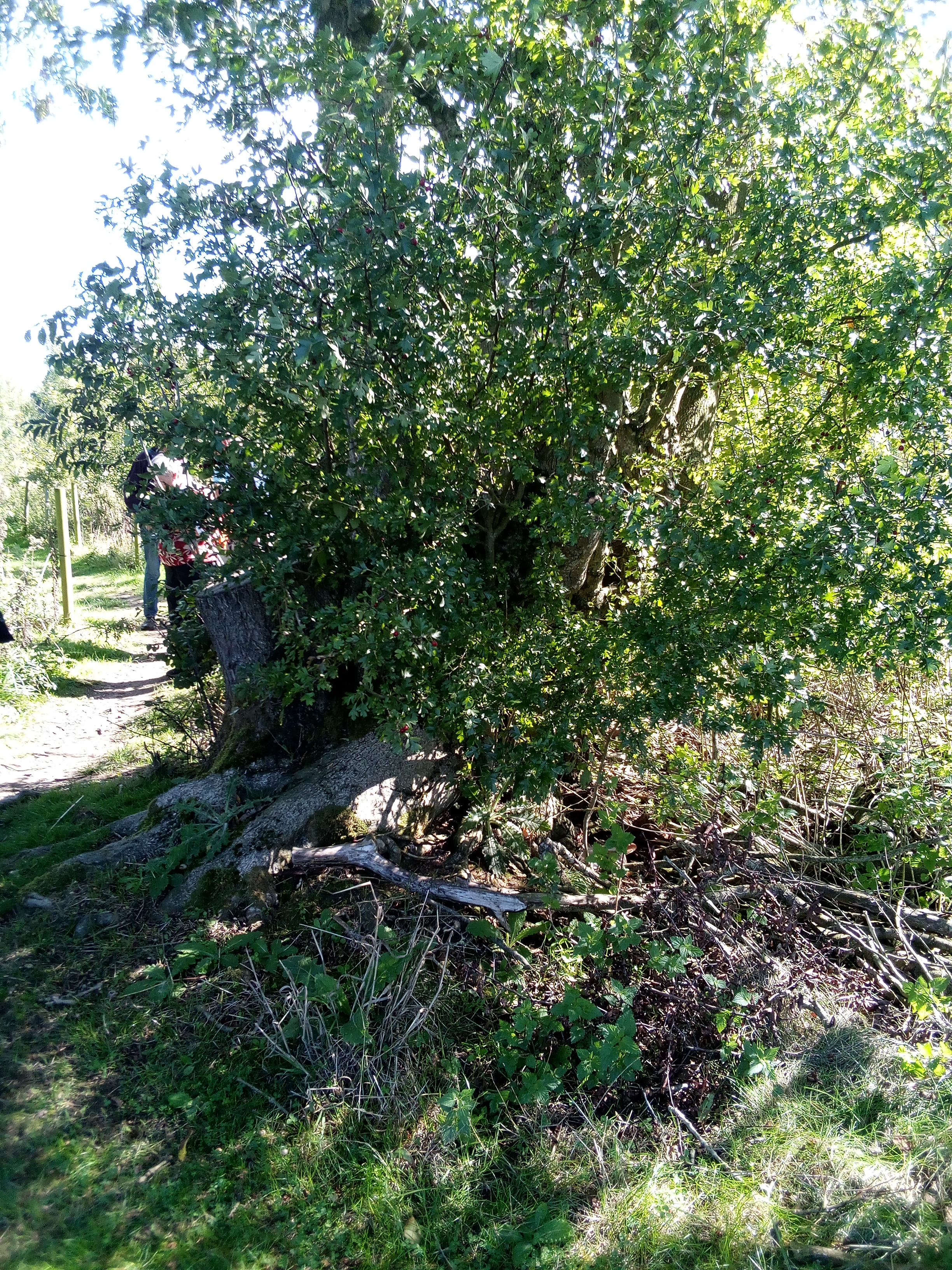
Ancient Tree Surveying
To record an ancient tree, you must find one – it was surprising to come across very old and large trees hidden in hedgerows. Often ancient trees are found on old estates, for example there is an oak at Danny House in Hurst that can be dated back to the 13th or 14th century! Next it’s important to measure at around 1.5m above the ground and take some clear photos. Then sign into the ancient tree inventory website and answer questions such as where is it, what is it’s common name, is the access to the tree private or public? There are then more detailed questions about moss, fungi, lichen and hollowing branches. All of the information needed is listed on the website: ati.woodlandtrust.org.uk . After uploading your tree to the website, a verifier will check if your tree is notable, veteran or ancient and it will be added to the map.
Recording ancient trees is an important to help protect and record the wildlife around us, hopefully there will be new legislation that will protect these hundreds of years old lives as much as a listed building.
Citizen Science
You can find out more about the Lost Woods Project here: https://www.lostwoods.org.uk//
our first bat walk
sept. 2025

Recently, Friends of Clay Pit Wood helped run the first bat walk with the Lost Woods team.
This walk involved an informative talk about bats followed by a walk-through of Hassocks, where attendees could listen out for bats using special bat detectors. We were unlucky with the weather on our first walk as it started raining a lot when we got there. The bat detectors can be easily damaged in rain so we had to be careful about when we used them during the walk.
Inside Proper Coffee, we gave an intro to bats, explaining their anatomy and yearly cycles.
After the talk, we started our route towards Clay Pit Wood. We stopped at a tunnel on the way down, where we demonstrated how bat echolocation works (very fascinating). Several UK bat species were discussed such as the common pipistrelle and soprano pipistrelle bats, explaining the different frequencies they can be heard at. We then demonstrated how to use the bat detectors, then went down to the Clay Pit Wood entrance to listen to some bats.
We continued listening for bats whilst walking along the footpath and then walked into a grassy area on the path, to listen further. It did start to rain quite a lot there so we had to protect the bat detectors. Umbrellas are a great choice for bat walks, as those with umbrellas could shield them from the rain. The grassy area combined with the Clay Pit wood entrance and the tunnel made for some excellent listening spots for bats. We started to head back to Proper Coffee after spending some time in the area.
At Proper Coffee, we ended with a short talk about what the Friends of Clay Pit Wood group is and explained projects such as our iRecord and iNaturalist species trackers.
We heard a range of bats on the walk, including:
Common Pipistrelle at 45kHz

Soprano Pipistrelle at 55kHz
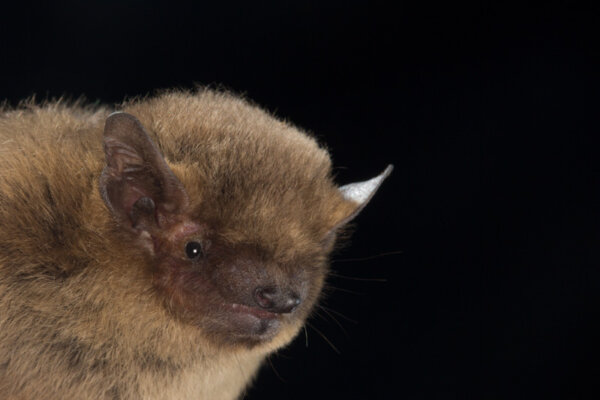
(c) Daniel Hargreaves
Serotine at 25kHz
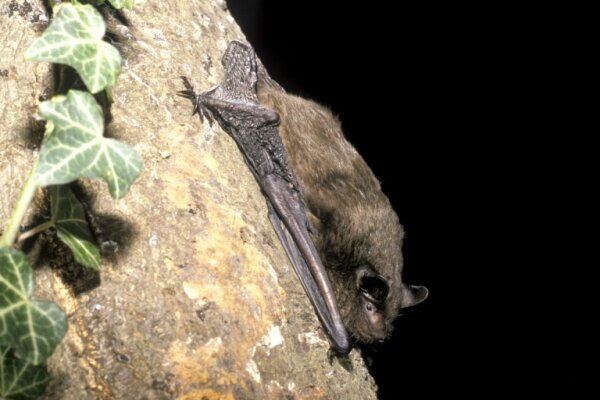
There is clearly a large variety of bats in the local area and we would be eager to check out Parklands Copse and Pheasant Field in future. Another bat walk into Claypit Wood would be interesting, in particular because of the body of water, but we would have to be more cautious due to the uneven terrain in the dark.
All in all, the bat walk went really well, and we were happy to see everyone enjoying themselves, and the shared sense of intrigue towards bats was nice too. We were a bit worried that there would hardly be any bats due to the rain, so we were very glad to have heard so many. The weather ended up being much nicer on our second bat walk, and we heard many bats then too, indicating that they are prevalent in Hassocks.
If we do further bat walks, I hope we visit places like Pheasant Field, as then we can map out more areas with bats. If you know other good locations for bat walks in the local area please do let us know via our email, claypitwood@proton.me , and thanks for reading!
You can find out more about bats and how to host your own bat walk here:
https://www.bats.org.uk/And you can find out more about the Lost Woods Project here:
https://www.lostwoods.org.uk/If you would like to be involved, give us an email at claypitwood@proton.me We'd love to hear from local people about their connection with the woods or anyone who is passionate about the wildlife around them.